Inulin
A premium functional ingredient for low-fat, high-fiber foods. Ideal for prebiotic fortification and producing high-quality oligofructose.
| 规格名称 | 规格值 |
|---|---|
| Appearance | White fine powder |
| Assay | 90%; 95%HPLC |
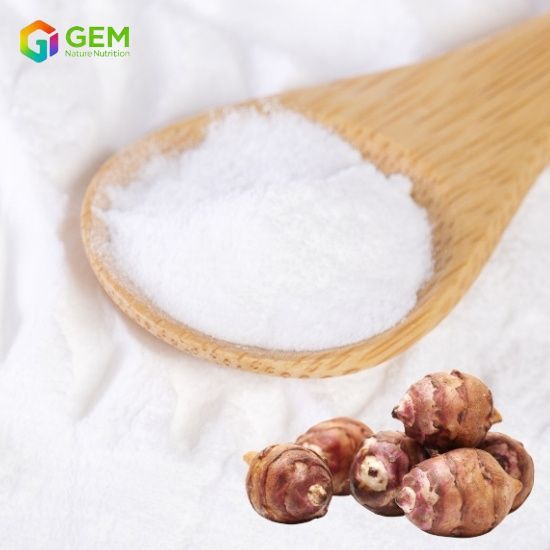
| Plant Used | Jerusalem artichoke; Chicory |
| Packing | 25kg/bag |
| Stock | Regular storage |
Inulin Powder
Inulin Details:
Specification: Inulin 90% and 95%
Plant Source: Jerusalem artichoke;Chicory
Certificate: ISO22000; ISO9001; FSSC22000; GMP; Kosher&Halal
Annual Production Capacity: More than 500 tons
Features: Light sweet taste; Water-soluble; Allergen (soy, gluten) free; Pesticides free; Low fat; Low calories; Long-life stability.
Application: Dietary supplement; Basic nutritional ingredients; Food and beverages; Food additives and Cosmetics,. etc.
What is Inulin?
Inulin is a natural polysaccharide found in many plants. As a type of fructan, it serves as a natural, water-soluble dietary fiber. Chicory and Jerusalem artichoke are the two primary raw materials for commercial production. We have both inulin sourced from chicory and Jerusalem artichoke.
Inulin powder has an extremely low caloric value and travels directly to the colon. There, it is selectively utilized by beneficial gut bacteria (such as Bifidobacterium).
It is a perfect functional food ingredient used to develop low-fat, high-fiber products without compromising on taste or texture. As a premium prebiotic dietary fiber, it serves as a high-quality raw material for the production of fructooligosaccharides (FOS) and high-fructose syrup. Whether used as a natural fat replacer or a nutritional fortificant, Inulin helps manufacturers meet the growing demand for healthy, plant-based food solutions.
Major Difference Between Chicory Inulin and Jerusalem Artichoke Inulin:
| Source | Plant Used | Spec | Market Share | Shelf Life |
|---|---|---|---|---|
| Chicory Inulin | Chicory | 90% | 10%-20% | 48months |
| Jerusalem artichoke Inulin | Jerusalem artichoke | 90%&95% | 80%-90% | 60months |
Inulin 90% Specification
| Testing Item | Specification | Test Method |
|---|---|---|
| Appearance | White or off white powder | Visual |
| Taste and Smell | Light sweet and odourless | GB/T41377-2022 |
| Impurity | No visible impurities | GB/T41377-2022 |
| Inulin Content% | ≧ 90% | HPLC |
| Other Saccharides (fructose+sucros++gl ucose)/% | ≤10% | HPLC |
| Ash; g/100g | ≤ 0.2 % | GB5009.4-2016 |
| Water; g/100g | ≤ 4.5 % | GB5009.3-2016 |
| PH | 5.0-7.0 | GB/T41377-2022 |
| Total Plate Count | ≤ 1000 cfu/g | GB4789.2-2016 |
| Molds and Yeasts | ≤ 100 cfu/g | GB4789.15-2016 |
| E. Coli | ≤ 10 cfu/g | GB4789.38-2012 |
Remark: 90% inulin, the specification is the same whether it's sourced from Chicory or Jerusalem artichoke.
Inulin Production Flow Process:
Raw material(Chicory or Jerusalem artichoke)→Cleaning→Cutting→Extraction→Purification→Concentration→Spray Drying→Inspection→Packing→Finished Products.
Natural Prebiotics-Inulin
As a functional dietary fiber, inulin offers diverse benefits for human health. Because humans and animals lack the specific enzymes required to break down inulin, it reaches the large intestine intact to exert its physiological effects.
1. Regulating Gut Microbiota Inulin is a recognized prebiotic that is selectively fermented by beneficial bacteria (particularly Bifidobacteria). It can stimulate their growth at 5 to 10 times the normal rate while inhibiting harmful bacteria (such as E. coli and saprophytic bacteria).
2. Improving Blood Lipids and Blood Sugar Numerous studies show that inulin intake effectively reduces levels of Total Cholesterol (TC) and Low-Density Lipoprotein Cholesterol (LDL-C). Since it is not hydrolyzed into monosaccharides in the upper digestive tract, it avoids fluctuations in glucose and insulin levels.
3. Promoting Mineral Absorption Inulin significantly enhances the absorption rate of minerals such as calcium, magnesium, zinc, and iron.
Safety and Regulations
China
- Approval: In 2009, the Ministry of Health of the People's Republic of China issued Announcement No. 5, officially approving inulin as a New Resource Food. It is permitted for use in all food categories except for infant formula.
- National Standards: The quality of inulin is strictly regulated under the National Standard GB/T 41377-2022: Quality Requirements for Inulin.
- Specifications: This standard defines sensory indicators (appearance, odor, and taste) and establishes core physicochemical requirements. For instance, inulin content (on a dry basis) must be at least 86.0%, while the total content of free sugars (glucose, fructose, and sucrose) must not exceed 14.0%.
- Testing Methods: The standard primarily utilizes High-Performance Liquid Chromatography (HPLC).
United States
In 2003, the U.S. Food and Drug Administration (FDA) recognized inulin as GRAS (Generally Recognized as Safe), with a recommended effective daily intake of 5 grams.
European Union
In 2015, the EU approved a health claim stating that "chicory inulin contributes to normal bowel function." To qualify for this claim, the product must ensure a daily consumer intake of 12 grams.