2-Deoxy-D-Ribose
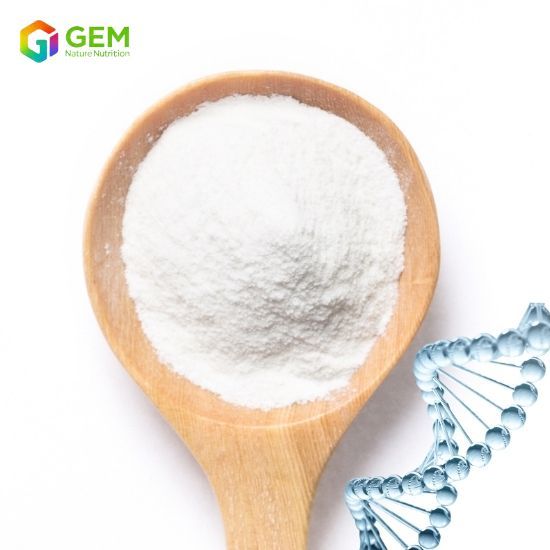
Explore the essential functions of deoxyribose, the backbone of DNA. Learn how this pentose sugar maintains genetic stability, supports DNA replication, and plays a critical role in the transmission of hereditary information across generations.
| 规格名称 | 规格值 |
|---|---|
| Appearance | White to off-white powder |
| Assay | 98%HPLC |
| CAS No. | 533-67-5 |
| Shelf Life | 12 months |
| Stock | Based on order |
2-Deoxy-D-Ribose
2-Deoxy-D-Ribose Powder Details:
Specification: 98%HPLC.
Other Name: Deoxyribose; D-2-DEOXYRIBOSE;THYMINOSE;2-DEOXYRIBOSE;D-erythro-Pentose, 2-deoxy-;(3S,4R)-3,4,5-trihydroxypentanal;desoxyribose; D-deoxyribose;(2R,4S,5R)-5-(hydroxyMethyl)tetrahy-drofuran-2,4-diol;ribodesose.
Certificate: ISO22000; ISO14001; ISO9001; BRC; Kosher; Halal
Annual Production Capacity: More than 50 tons
CAS No: 533-67-5
EINECS No: 208-573-0
Molecular Formula: C4H9O3CHO(C5H10O4)
Packing: 25kg/drum.
What is Deoxy-D-Ribose?
It is an organic compound which a pentose derivative present in all cells and is a type of carbohydrate where the ratio of hydrogen atoms to oxygen atoms does not follow the standard 2:1 ratio.
The naturally occurring form is 2-Deoxy-D-Ribose, which has one fewer oxygen atom at the 2-position compared to D-ribose. In crystalline form, it exists as a five-membered ring hemiacetal, occurring as two isomers: the $\alpha$-type and $\beta$-type. It is a fundamental component of the polynucleotide deoxyribonucleic acid (DNA). Within DNA, deoxyribose phosphate molecules are linked by phosphodiester bonds to form a chain, which constitutes the backbone of the polynucleotide fiber.
2-Deoxy-D-Ribose 98% Specification:
| Testing Item | Specification | Test Method |
|---|---|---|
| Description | White crystals or crystalline powder | Visual |
| Assay | 98% | HPLC |
| Specific Rotation | -54.0°~-58.0° | AJI TEST 1 |
| pH | 6.0-8.0 | pH Meter |
| Loss on Drying | ≤ 0.5 % | AJI TEST 11 |
| Residue on Ignition | ≤ 0.5 % | AJI TEST 11 |
| Heavy Metals | ≤ 20 mg/kg | AJI TEST 7 |
What's the Major Function of D-Ribose?
The functions of deoxyribose include constructing DNA structure, participating in the transmission of genetic information, maintaining genetic stability, assisting in the regulation of gene expression, and supporting biological evolution. The details are as follows:
- Constructing DNA Structure: Deoxyribose and phosphate groups connect alternately to form the DNA backbone. This stable structure provides the support for DNA's double-helix shape—much like the framework of a skyscraper—ensuring the stability and integrity of DNA so that genetic information can be securely stored within it.
- Participating in Genetic Information Transmission: During the process of DNA replication, deoxyribose serves as a vital material foundation. Newly synthesized DNA strands require deoxyribose for construction, ensuring that genetic information is accurately passed from parent DNA to offspring DNA, allowing the genetic traits of organisms to continue.
- Maintaining Genetic Stability: It helps maintain the stability of genes and reduces the possibility of genetic mutations. The stable deoxyribose-phosphate backbone protects the genetic code carried by base pairs, keeping genes relatively stable during cell division and organism reproduction.
- Assisting in Gene Expression Regulation: Although it is not directly involved in the core process of gene expression, it indirectly influences regulation by maintaining the structure of DNA. A proper DNA structure facilitates the binding of proteins, such as transcription factors, to the DNA, thereby regulating the "turning on" and "turning off" of genes.
- Supporting Biological Evolution: Throughout the long-term process of biological evolution, changes in DNA are a key factor. As a fundamental component of DNA, the balance between the stability and variability of deoxyribose has played a role in how organisms adapt to environmental changes and evolve new characteristics.