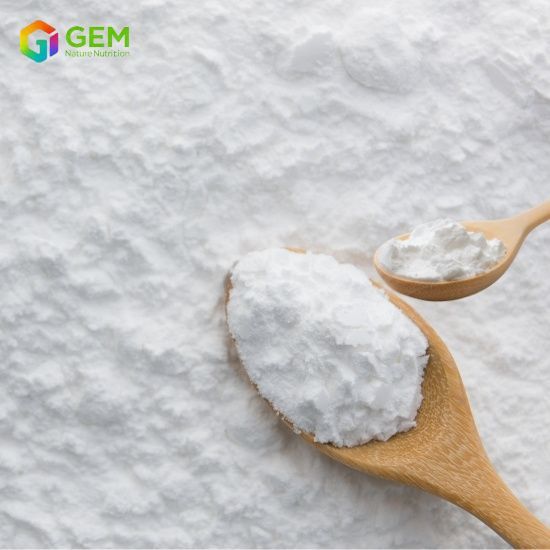
D-Ribose
Ribose is the key for adenosine triphosphate (ATP) production and the molecular key to cellular energy. Give strong support to the heart and skeletal muscles.
| 规格名称 | 规格值 |
|---|---|
| Assay | 97%-102%HPLC |
| Patents | EU&USA |
| CAS No. | 50-69-1 |
| Shelf Life | 24 months |
| Stock | Regular storage |
D-Ribose
D-Ribose Powder Details:
Specification: 97%-102%HPLC
Certificate: ISO22000; ISO14001; ISO9001; ISO45001; BRC; Kosher; Halal
Annual Production Capacity: More than 100 tons
Features: Natural 5-carbon monosaccharide; Sweet taste; Water-soluble; Allergen (soy, gluten) free; Pesticides free; ETO free
Application: Pharmaceutical and medicine industry; Dietary supplement; Sports nutrition; Food and beverages; Food additives and Cosmetics; Feed nutrition. etc.
Main function: Vital Cellular Energy Synthesis; Accelerated Fatigue Recovery; Optimized Anaerobic Threshold; Peak Athletic Performance; Cardiovascular Metabolic Support; Enhanced Muscle Comfort.
Packing: 25kg/drum.
What is D-Ribose?
D-Ribose, also called as Ribose, is a 5-carbon monosaccharide naturally presenting in every living cells and it is a structural component of Adenosine Triphosphate (ATP). Molecular formula is C5H10O5, molecular weight is 150.13. D-Ribose appearance is white crystals or crystalline powder with sweet taste, easily soluble in water.
The Molecular Key to Cellular Energy: It is the major energy substance in cells, which can increase cellular energy levels and stimulate the natural energy production. While the body can synthesize D-Ribose, the process is slow, especially in high-demand tissues like the heart and skeletal muscles.
D-Ribose is widely used in food and beverage, plant-based meat, sports nutrition, health food, cosmetic and feed nutrition products. What's more, it is also an prominent intermediate or starting material for varieties of nucleosides drugs, like Capecitabine, Ticagrelor, Remdecivir,etc.
D-Ribose Powder Specification:
| Testing Item | Specification | Test Method |
|---|---|---|
| Description | White crystals or crystalline powder | Visual |
| Assay | 97-102% | HPLC |
| Specific rotation | -18.0°~-22.0° | AJI TEST 1 dried sample, C=4, H2O |
| State of solution(Transmittance) | ≥ 95.0% | AJI TEST 2 |
| Loss on Drying | ≤ 3.0 % | AJI TEST 11 |
| Residue on Ignition | ≤ 0.2 % | AJI TEST 13 |
| Orther Saccharides | Negative | AJI TEST 9 |
| Heavy Metals (Pb) | ≤ 10 mg/kg | AJI TEST 7 |
| Arsenic (As) | ≤ 2.0 mg/kg | AJI TEST 8 |
| Total Plate Count | ≤ 100 cfu/g | AJI TEST 28 |
| Molds and Yeasts | ≤ 100 cfu/g | AJI TEST 28 |
| Salmonella | Absence/25g | AJI TEST 28 |
| E. Coli | Absence/10g | AJI TEST 28 |
| Staphylococcus aureus | Absence/10g | AJI TEST 28 |
Remark: Our D-ribose is with patents which help you to fit your market needs easily.
D-Ribose Production Flow Process:
Raw materials reception (liquid glucose, corn steep liquor, yeast powder,etc.)→Fermentation→Membrane filtration→Ion exchange→Concentrating→Chromatography→Concentrating→Decolorization(adding active carbon)→ concentrating→dissolving(adding ethanol)→Crystallization→Separation→Drying→Screening (Magnet Bar)→Weighing and packing→Metal detection→Packaging&Storage.
What's kind of role that D-Ribose played in human body?
D-ribose is an important component of the genetic material - ribonucleic acid (RNA) - in living organisms. It plays a pivotal role in the metabolism of nucleosides, proteins and fats. D-ribose, as a natural component present in all cells of living organisms, is closely related to the formation of adenosine monophosphate and the regeneration of adenosine triphosphate (ATP), and is one of the most fundamental energy sources for life metabolism. Plays a critical role in the metabolism of the heart and skeletal muscles, promoting the recovery of ischemic and hypoxic tissues.
Nucleic acid drugs are an important means for treating virus, tumor and AIDS. D-ribose is an important intermediate of many nucleic acid drugs, which can be used in the production of many drugs, such as triazole nucleoside, adenosine, thymidine, cytidine, adenosine fluoride, 2-methyladenosine, vitatoxin, pyrazole toxin, adenosine, etc.
Health Benefits & Biological Functions
Why athletes and fitness enthusiasts need D-Ribose?
The human heart and skeletal muscles themselves synthesize ATP at a slow rate, while D-ribose can accelerate the synthesis of ATP in the heart and skeletal muscles. Therefore, the heart and skeletal muscles are the organs and tissues that need D-ribose the most.
What's the main function of D-Ribose?
1. Vital Cellular Energy Synthesis
D-Ribose is the fundamental building block of ATP (Adenosine Triphosphate). By providing the raw material the cells need, it helps maintain high energy levels at the molecular level, ensuring your "cellular batteries" are always charged.
2. Accelerated Fatigue Recovery
While other sugars provide a temporary "spike," D-Ribose focuses on deep recovery. It helps the body restore energy stores that have been depleted by stress, overwork, or intense physical activity, helping you bounce back faster.
3. Optimized Anaerobic Threshold
For athletes and high-performers, D-Ribose supports the body's ability to maintain powerful during high-intensity intervals. By optimizing the energy available to muscles, it allows you to push harder for longer before the onset of fatigue.
4. Peak Athletic & Physical Performance
By streamlining the rate at which skeletal muscles regenerate energy, D-Ribose helps improve overall physical output. It is a premier choice for sports nutrition formulations aimed at increasing stamina and power.
5. Cardiovascular Metabolic Support
The heart is the most energy-demanding organ in the body. D-Ribose provides critical metabolic support to cardiac tissues, helping to maintain healthy heart function and efficient energy recycling within the cardiovascular system.
6. Enhanced Muscle Comfort & Flexibility
Intense exertion can lead to energy "depletion" in muscle fibers, resulting in stiffness. D-Ribose aids in the rapid replenishment of these energy stores, significantly reducing post-activity soreness and promoting muscular comfort.
## FAQ1. Is there any orther forms for D-Ribose?
We have powder now, you can use it as raw material for making D-ribose canpsules, D-ribose granules or tablets.
2. What's your quality standard for Ribose?
GB 1886.141-2016; EU 2017/2470; FCC 11; USP 40; AJI 97.
3. What are the negative side effects of D-Ribose?
D-ribose may cause gastrointestinal discomfort, blood sugar fluctuation, allergic reaction. Special populations (such as diabetes patients, gout patients) should use it with caution.
4. Which foods contain D-ribose?
Foods such as red meat, milk, fish, and whole grains all have natural D-ribose.
5. Do you have patents for D-ribose in EU&USA market?
Yes, we have patents.