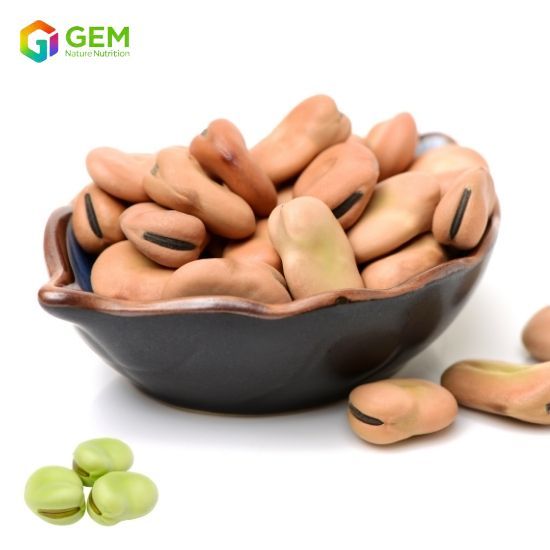
Favabean protein
Elevate your formula with our non-GMO, allergen-free Fava Bean protein. High in BCAAs and Arginine. The perfect sustainable alternative to soy and pea protein.
| 规格名称 | 规格值 |
|---|---|
| Appearance | Light yellow fine powder |
| Protein Content | 90% |
| Mesh | 100mesh |
| Shelf Life | 24 months |
| Main Function | Promote skeletal development and protein supplement. |
Favabean Protein
Favabean Protein Powder Quick View:
Certificate: ISO22000; ISO14001; ISO9001; FSSC22000; BRC; Kosher; Halal.
Annual Production Capacity: More than 100 tons.
Features: Good solubility; Clean taste; Smooth mouth feel; Low fat; Non-GMO; Allergen free; Super green food.
Application: Sports nutrition; Dietary supplement; Basic nutritional ingredients; Food and beverages; Protein bar&Snack; Baking&Cake; Meat alternatives, etc.
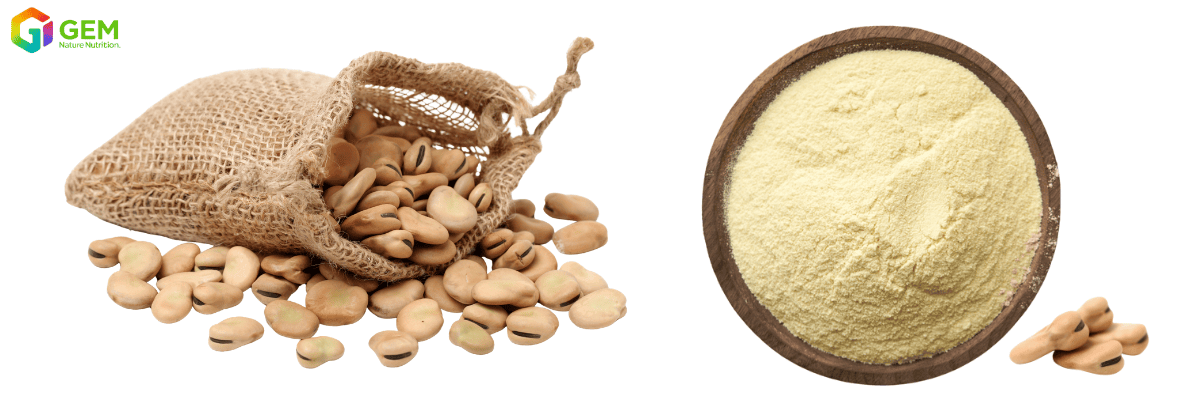
What is Favabean Protein?
Fava Bean Protein (also known as Broad Bean protein) is rapidly becoming a preferred alternative to soy and pea protein in the global health market. Sourced from top-quality Vicia faba seeds, our extraction process concentrates the bean’s natural power into a high-purity protein isolate.
Exceptional Nutritional Profile
While raw fava beans contain approximately 25% protein, our advanced processing brings the protein content up to 90%. This isolate retains the vital nutrients of the whole bean while offering a concentrated source of:
Essential Amino Acids: Perfectly balanced to meet human physiological needs.
Key Concentrations: Exceptionally high in Arginine, Glutamic Acid, and Branched-Chain Amino Acids (BCAAs) for muscle recovery.
Vital Micronutrients: Naturally rich in Vitamin B1, B6, and essential minerals including Iron, Potassium, and Magnesium.
Favabean Protein 90% Specification:
| Test Item | Specification | Test Method |
|---|---|---|
| Appearance | Light yellow powder | Q/YST 0012S-2020 |
| Protein(dry basis),g/100g | ≥90% | GB 5009.5-2016 |
| Moisture, g/100g | ≤10% | GB 5009.3-2016 |
| Ash(dry basis),g/100g | ≤7% | GB 5009.4-2016 |
| PH | 6.0-8.0 | PH Meter |
| Gluten | <20ppm | Elisa |
| Soy | <20ppm | Elisa |
| Lead,mg/kg | ≤1.0mg/kg | BS EN ISO 17294-2 2016 mod |
| Arsenic,mg/kg | ≤0.5mg/kg | BS EN ISO 17294-2 2016 mod |
| Mercury,mg/kg | ≤0.1mg/kg | BS EN ISO 17294-2 2016 mod |
| Ochratoxin | Negative | GB 5009.96-2016 |
| Total Plate Count | ≤10000CFU/g | GB 4789.2-2022 |
| Yeast & Molds | ≤100CFU/g | GB 4789.15-2016 |
| Coliforms | ≤30CFU/g | GB 4789.3-2016 |
| Salmonella | Negative | GB 4789.4-2016 |
| E. Coli | Negative | GB 4789.38-2012 |
| Staphylococcus aureus | Negative | GB4789.10-2016 |
Amino Acid Testing Data
| Item | Results | Unit |
|---|---|---|
| Aspartic acid | 10.21 | g/100g |
| Threonine | 3.41 | g/100g |
| Serine | 4.9 | g/100g |
| Glutamic acid | 16.75 | g/100g |
| Glycine | 3.89 | g/100g |
| Alanine | 4.16 | g/100g |
| Valine | 4.67 | g/100g |
| Methionine | 0.96 | g/100g |
| Isoleucine | 4.6 | g/100g |
| Leucine | 8.74 | g/100g |
| Tyrosine | 3.83 | g/100g |
| Phenylalanine | 4.65 | g/100g |
| Lysine | 6.25 | g/100g |
| Histidine | 2.49 | g/100g |
| Arginine | 9.16 | g/100g |
| Proline | 4.29 | g/100g |
| Cystine | 1.12 | g/100g |
| Tryptophan | 0.85 | g/100g |
| Total 16 | 92.96 | g/100g |
| Total 18 | 94.94 | g/100g |
Nutrition Data for Favabean(Broad Bean) Protein 90%.
| Nutritional information | Results | Unit |
|---|---|---|
| Energy | 1491 | kJ/100g |
| Dietary Fiber | 0.396 | g/100g |
| Total Carbohydrates | 2.0 | g/100g |
| Protein | 92.5 | g/100g |
| Fat | < | g/100g |
| Moisture | 7.53 | g/100g |
| Na(Sodium) | 8900 | mg/kg |
| Remark: Amino acid and nutrition values are typical, not to be construed as specifications. |
Vicia faba protein Production Process:
- Favabean cleaning: put the raw material into a large container and add sufficient clean water. Stir well to remove impurities, dirt, and surface contaminants.
- Soaking: after cleaning, the favabeans are soaked in clean water for a period of typically 6-10 hours. This process softens the cell walls of the favabeans, facilitating the subsequent extraction process.
- Grinding: after soaking, grind the beans into a fine paste.
- Precipitation and separation: allow the suspension to stand and let the protein to precipitate out. Then separate the supernatant from the precipitate, which can be achieved through centrifugation or filtration.
- Second separation: to remove impurities and residues.
- Dewatering and drying: Dewater the washed protein precipitate. Subsequently, dry the protein precipitate at an appropriate temperature, then crude favabean protein powder is coming out.
- Sieving and Packaging: Grind the dried broad bean protein precipitate to achieve the desired particle size like 100mesh, and then package and seal it to maintain its freshness and quality.
- Finished products.
Why Choose Fava Bean Protein?
As the plant-based market evolves, Fava Bean protein stands out for its "Triple-Threat" advantage:
- Allergen-Free & Non-GMO: Unlike soy, fava beans are not among the major allergens, making them ideal for "Clean Label" product development.
- Low-Fat & High-Fiber: Supports metabolic regulation and digestive health, catering to weight-conscious consumers and fitness enthusiasts.
- Superior Clean Taste: It offers a more neutral flavor profile compared to pea or rice protein, requiring less masking in your final formulation.
Versatile Industrial Applications
Our Fava Bean protein is a nice functional ingredient fit for vegetarians, vegans, and athletes. Its excellent solubility and emulsification properties make it a perfect fit for:
- Dairy Alternatives (Milk, Yogurt, and Cheese)
- Performance Nutrition (Protein Powders and Energy Bars)
- Plant-Based Meats (Burgers and Sausages)
- Functional Snacks (Baked goods and crisps)
The Core Advantages of Fava Bean Protein for Human Health?
Fava bean protein is not just a sustainable plant-based alternative; it is a nutritional ingredients with specific physiological benefits. Here are the four primary advantages of incorporating fava bean protein into a daily diet:
1. Targeted Cardiovascular Protection
Fava bean protein is a heart-healthy choice that actively manages cholesterol levels.
LDL Reduction: It contains soluble dietary fiber that binds to cholesterol in the digestive tract, promoting its excretion.
Proven Results: Clinical studies indicate that consuming 25g of plant protein daily can lower Low-Density Lipoprotein (LDL) levels by 5% to 10%, significantly reducing the risk of arteriosclerosis.
2. Strategic Weight Management & Satiety
For those focusing on body composition and weight control, fava bean protein offers a metabolic edge.
Low Glycemic Index (GI): It prevents rapid blood sugar spikes, leading to more stable energy levels.
Delayed Gastric Emptying: By slowing the digestion process, fava bean protein provides a long-lasting sense of fullness (satiety), which naturally reduces overall calorie intake.
3. Reliable and Sustainable Energy Source
While carbohydrates are the body's primary fuel, protein serves as a critical secondary energy reserve.
Metabolic Support: When carbohydrate or fat intake is insufficient, fava bean protein can be broken down to provide the ATP (energy) necessary to maintain normal bodily functions and prevent fatigue.
Fitness Compatibility: It is ideal for low-carb or ketogenic formulations where protein-driven energy is essential.
4. Regulation of Essential Physiological Functions
Beyond muscle building, fava bean protein is a fundamental building block for the body’s internal systems:
Hormonal Balance: It participates in the synthesis of protein-based hormones that regulate metabolism, growth, and reproduction.
pH Homeostasis: Protein acts as a buffer, helping to maintain the delicate acid-base balance in blood and body fluids.
Immune System Support: It provides the raw materials (immunoglobulins) needed to enhance immunity and resist viral and bacterial diseases.