Mung bean protein
Discover the power of mung bean protein: a hypoallergenic, high-leucine plant protein that supports muscle repair and easy digestion. Learn why it’s the ultimate "functional food" for athletes and vegetarians alike.
| 规格名称 | 规格值 |
|---|---|
| Appearance | Light yellow fine powder |
| Protein Content | 80% |
| Mesh | 100mesh |
| Shelf Life | 24 months |
| Main Function | Helps keeping muscle and tissue health. |
Mung Bean Protein
Mung Bean Protein Powder Quick View:
Certificate: ISO22000; ISO14001; ISO9001; FSSC22000; BRC; Kosher; Halal.
Annual Production Capacity: More than 100 tons.
Features: Fresh bean flavor; Natural plant protein; Vegan food; Green food.
Application: Sports nutrition; Dietary supplement; Basic nutritional ingredients; Food and beverages; Protein bar&Snack; Baking&Cake; Meat alternatives, etc.
What is Mung Bean Protein?
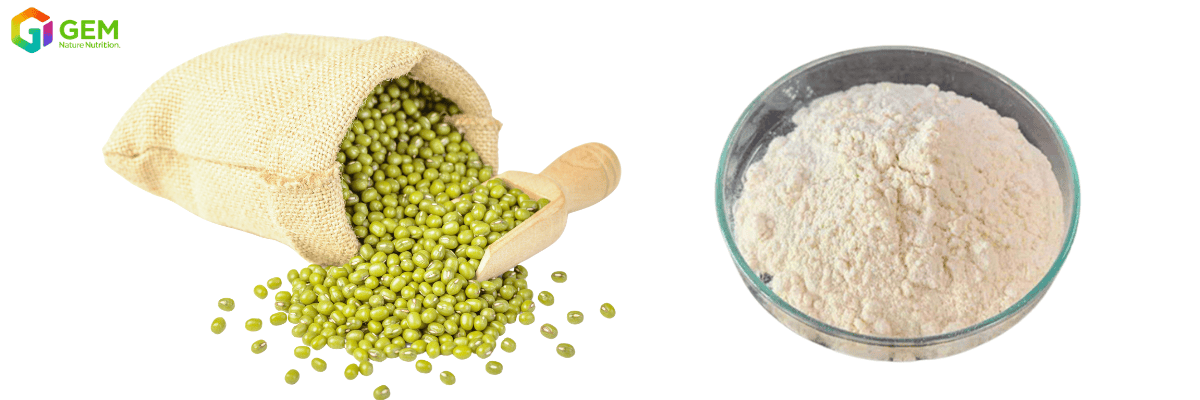
Mung bean protein powder is one kind of plant-based nutritional extracted from the Vigna radiata bean which is also an Asian cuisine, mung bean protein has emerged as a high-performance, sustainable alternative to soy, pea, and whey proteins.
A Heritage of Health & Wellness
In traditional Chinese culture, the mung bean is often used for its therapeutic properties. It is widely recognized for its ability to: Clear Internal Heat, Detoxify & Refresh, Support Cardiovascular Health.
Sustainable & Efficient Production
The production of mung bean protein is a model of full-crop utilization. By processing the whole bean, we create a range of high-value by-products, ensuring zero waste: Mung Bean Protein, Mung Bean Starch, Mung Bean Vermicelli.
Mung Bean Protein 80% Specification:
| Test Item | Specification | Test Method |
|---|---|---|
| Appearance | Light yellow powder | Q/YST 0012S-2020 |
| Protein(dry basis),g/100g | ≥80% | GB 5009.5-2016 |
| Moisture, g/100g | ≤7% | GB 5009.3-2016 |
| Ash(dry basis),g/100g | ≤5% | GB 5009.4-2016 |
| Crude fat | ≤5% | GB 5009.6-2016 |
| Soy | <20ppm | Elisa |
| Lead,mg/kg | ≤0.5mg/kg | BS EN ISO 17294-2 2016 mod |
| Arsenic,mg/kg | ≤0.5mg/kg | BS EN ISO 17294-2 2016 mod |
| Mercury,mg/kg | ≤0.2mg/kg | BS EN ISO 17294-2 2016 mod |
| Cadmium,mg/kg | ≤0.5mg/kg | BS EN ISO 17294-2 2016 mod |
| Total Plate Count | ≤30000CFU/g | GB 4789.2-2022 |
| Yeast & Molds | ≤100CFU/g | GB 4789.15-2016 |
| Coliforms | ≤90CFU/g | GB 4789.3-2016 |
| Salmonella | Negative | GB 4789.4-2016 |
| E. Coli | Negative | GB 4789.38-2012 |
| Staphylococcus aureus | Negative | GB4789.10-2016 |
Amino Acid Testing Data
| Item | Results | Unit |
|---|---|---|
| Alanine | 3.27 | g/100g |
| Arginine | 5.75 | g/100g |
| Aspartic acid | 10.1 | g/100g |
| Glutamic acid | 14.9 | g/100g |
| Glycine | 2.73 | g/100g |
| Histidine | 2.38 | g/100g |
| Hydroxyproline | <0.05 | g/100g |
| Isoleucine | 3.77 | g/100g |
| Leucine | 7.27 | g/100g |
| Lysine | 5.74 | g/100g |
| Ornithine | <0.05 | g/100g |
| Phenylalanine | 5.67 | g/100g |
| Proline | 3.31 | g/100g |
| Serine | 4.32 | g/100g |
| Threonine | 2.25 | g/100g |
| Tyrosine | 2.57 | g/100g |
| Valine | 4.48 | g/100g |
| Cystine+Cystein | 0.35 | g/100g |
| Tryptophan | 0.609 | g/100g |
| Methionine | 1.08 | g/100g |
| Test Method: ISO 13903:2005; EU 152/2009 (F) |
Nutrition Data
| Nutritional information | Results | Unit |
|---|---|---|
| Energy | 1571 | kJ/100g |
| Total Carbohydrates | 7.6 | g/100g |
| Protein | 84.8 | g/100g |
| Fat | 0 | g/100g |
| Na(Sodium) | 892 | mg/100g |
| Remark: Amino acid and nutrition values are typical, not to be construed as specifications. |
Production Process:
Mung Bean-Screening-Dehulling-Milling-Soaking-Separating-Sterilization-Neutralization-Centrifugation-Washing-Centrifugation-Precipitation-Flash Evaporation-Spray Drying-Packing-Metal Detecting-Mung Bean Protein.
What's the Major Function of Mung Bean Protein?
Mung bean protein is more than just a muscle-builder; It is considered a "functional food" just like mung bean itself which have specific effects on human body.
1: Muscle Repair & Strength: Mung bean protein contains complete protein, particular with high levels of leucine. These amino acid can stimulate muscle protein synthesis. Studies show it can improve muscular strength.
2: High Digestibility: Unlike soy or pea protein, mung bean protein is hypoallergenic and contains less "anti-nutrients" (like phytic acid), which means it causes significantly fewer bloating and is easily absorbed by the gut.
3: Perfect alternatives for animal protein: if people don’t like animal protein, mung bean protein is your best choice. It’s a perfect fit for vegetarians.
Application of Mung Bean Protein Products:
1: Plant-based meat products: mung bean protein can be added into vegetarian eggs, vegetarian steaks, vegetarian ground beef, vegetarian chicken, etc.
2: Dairy beverages and plant-based milk: it is a very good choice to make a formula with mung bean protein which make final products more nutritional.
3: Cooked meat products.
4: Protein supplement ingredients: just like pea protein, rice protein, mung bean protein has became more and more popular in protein supplement market.