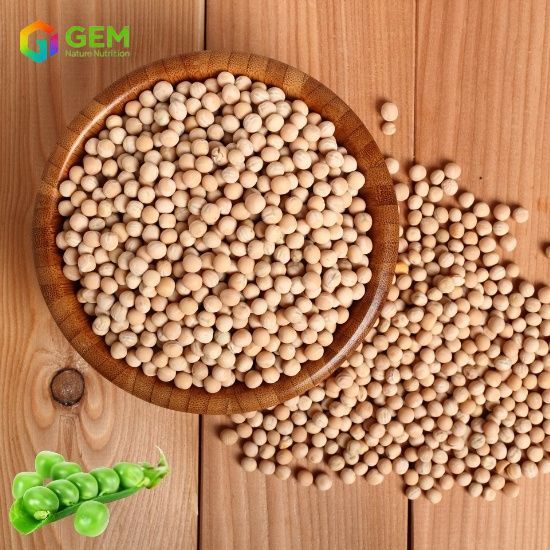
Pea protein powder
Pea protein has become a premier alternative to whey and soy, offering a clean, hypoallergenic, and highly sustainable source of nutrition.
| 规格名称 | 规格值 |
|---|---|
| Appearance | Light yellow fine powder |
| Grade | Food and feed grade are all available |
| Mesh | 95% pass 100mesh |
| Shelf Life | 24 months |
| HS Code | 2106100000 |
Pea protein powder
Pea protein powder quick view:
Specification: 80%, 85%, 90%(food grade); 50%, 70%(feed grade)
Certificate: ISO22000; ISO14001; ISO9001; FSSC22000; BRC; Kosher; Halal.
Annual Production Capacity: More than 500 tons
Features: Fragrant bean flavor; Natural plant protein; Vegan food; Green food.
Application: Sports nutrition; Dietary supplement; Basic nutritional ingredients; Food and beverages; Protein bar&Snack; Baking&Cake; Meat alternatives, etc.
Main function: Muscle Growth & Tissue Repair, Cardiovascular Support, Immune Enhancement, Bone Health, Sports Nutrition.
Low sodium pea protein is also available.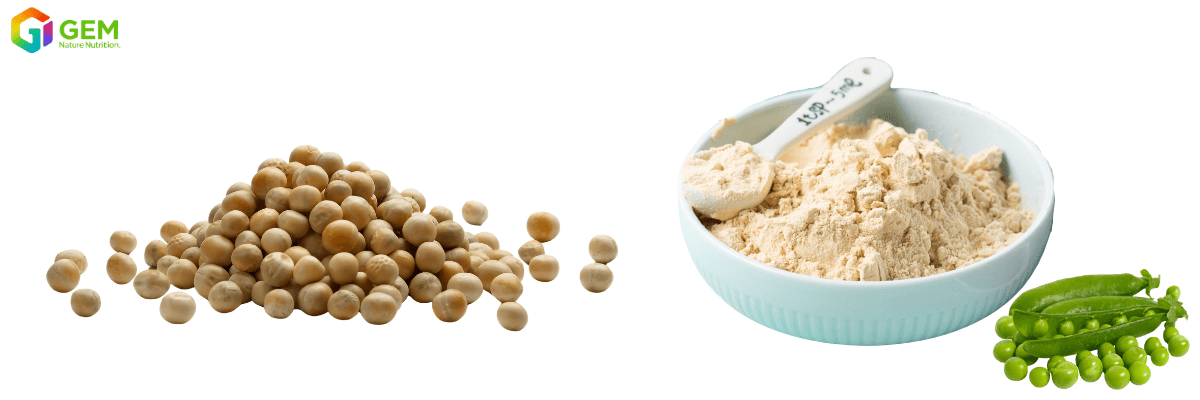
What is Pea Protein?
Sourced from superior non-GMO peas imported from Canada, our production process is based on advanced technology to extract the highest quality protein while maintaining the integrity of the raw material.
1. The Full Pea Utilization Model: Starch, Fiber, & Protein
We believe in maximizing the bioavailability and sustainability of our raw materials. By processing Canadian peas into a full suite of functional ingredients, we provide a "zero-waste" solution for the food and feed industries:
- Pea Protein (Food & Feed Grade): High-purity protein for human supplements and animal nutrition.
- Pea Protein Peptides: Smaller molecular chains for faster absorption.
- Textured Pea Protein (TPP): The perfect choice for plant-based meat alternatives.
- Pea Starch & Vermicelli: Essential for texture and traditional food manufacturing.
- Pea Fiber: Very good for digestive health applications.
2. Comprehensive Amino Acid Profile
Pea protein powder is not just for sports nutrition; it is also perfect for the general population. It contains over 18 different amino acids, providing a nearly complete profile that matches the human body's requirements. The proportion of amino acids in our pea protein is scientifically balanced to improve protein absorption rates, ensuring that your body gets the most out of every gram.
3. Canadian-Sourced Pea
The origin of the raw material defines the quality of the final extract. By importing our peas from Canada, we ensure:
- Superior Soil Quality: Resulting in higher nutrient density.
- Strict Non-GMO Standards: Meeting global regulatory demands for clean-label products.
- Neutral Taste Profile: Our peas are processed to have a low "beany" flavor, making them ideal for protein shakes, bars, and dairy alternatives.
Fermented vs. Isolated Pea Protein
Our facility has two primary processing techniques to meet diverse customer preferences. We source premium dried peas and process them according to the following standards:
- Fermented Pea Protein: Peas need to be soaked for hours during production.
- Isolated Pea Protein: Use dried peas directly to extract pea protein.
Difference: A slight taste and color difference.
Specification Data: Totally same.
Price: Totally same.
Product Specification:
| Test Item | Specification | Test Method |
|---|---|---|
| Character | Light yellow fine powder | Visible |
| Smell | Characteristic with original plant flavor | Organ |
| Mesh | 95% pass 100mesh | Sieve Machine |
| Impurity | No visible impurity | Visible |
| Moisture | ≤10% | GB 5009.3-2016 (I) |
| Protein (on dry basis) | ≥80% | GB 5009.5-2016 (I) |
| Ash | ≤8% | GB 5009.4-2016 (I) |
| PH | 6.5-8.5 | GB 5009.237-2016 |
| Melamine | Not Detected | GB/T 22388-2008 |
| Crude Fat | ≤ 10% | GB/T 5009.6-2016 |
| Aflatoxins(B1+B2+G1+ G2)(μg/kg) | < 10ppb | GB 5009.22-2016 (III) |
| Lead | ≤0.5ppm | GB/T 5009.12-2017 |
| Arsenic | ≤0.5ppm | GB/T 5009.11-2014 |
| Mercury | ≤0.1ppm | GB/T 5009.17-2014 |
| Cadmium | ≤0.5ppm | GB/T 5009.15-2014 |
| Total Plate Count | ≤10000CFU/g | GB 4789.2-2016 (I) |
| Yeast & Molds | ≤100CFU/g | GB 4789.15-2016(I) |
| Coliforms | ≤30CFU/g | GB 4789.3-2016 (II) |
| Salmonella | Not Detected/25g | GB 4789.4-2016 |
| E. Coli | Not Detected/25g | GB 4789.38-2012 (II) |
Amino acid testing data in pea protein 80%:
| Item | Results | Unit |
|---|---|---|
| Alanine | 3.05 | % |
| Aspartic acid | 8.92 | % |
| Cystine | 0.68 | % |
| Glutamic acid | 11.95 | % |
| Glycine | 3.04 | % |
| Histidine | 2.42 | % |
| Isoleucine | 3.31 | % |
| L-arginine | 6.12 | % |
| Leucine | 5.86 | % |
| Lysine | 5.6 | % |
| Methionine | 0.73 | % |
| Phenylalanine | 3.99 | % |
| Proline | 3.46 | % |
| Serine | 3.80 | % |
| Sum of amino-acids | 72.78 | % |
| Threonine | 3.00 | % |
| Tryptophan | 0.60 | % |
| Tyrosine | 2.61 | % |
| Valine | 3.64 | % |
Nutrition Data for Pea Protein Isolate 80%
| Nutritional information | /100g | Unit |
|---|---|---|
| Caloric content | 397 | kcal |
| Total Fat | 8.34 | g |
| Saturated Fat | 1.95 | g |
| Trans Fat | 0.06 | g |
| Dietary Fiber | 1.83 | g |
| Total Carbohydrate | 4.6 | g |
| Sugar | <0.1 | g |
| Protein | 81.3 | g |
| Ca(Calcium) | 166.64 | mg |
| Fe(Iron) | 22.41 | mg |
| Na(Sodium) | 881.38 | mg |
| K(Potassium) | 97.61 | mg |
| Remark: We also provide pea protein with low sodium. |
Production Process:
Raw material(peas) checking, Raw material storage,Selecting and removing impurities,Soaking, Smashing,Separation,Protein separation and purifying, Flashing sterilization,Sieving and drying, Packing, Metal detection, Finished products.
How to choose your protein content?
Selecting the correct protein content is a balance between formulation goals, cost-efficiency, and labeling requirements. While "Pea Protein 80%" is the global industry standard, higher concentrations like 85% and 90% offer specific advantages for premium products.
1. Pea Protein 80% (The Industry Standard)
- The Best-Seller: This is the most popular specification globally for food-grade applications.
- Why it's popular: It offers the best balance of high-quality plant protein and cost-effectiveness.
- Best For: General protein shakes, meal replacements, plant-based meats (TVP), and bakery products.
- Recommendation: If you are launching a new product and are unsure of the specification, 80% Pea Protein is the most reliable starting point.
2. Pea Protein 85% & 90% (Premium High-Purity)
For specialized formulations where every gram of "purity" matters, we offer concentrated grades.
- The Difference: These grades undergo additional filtration and purification steps to remove more of the natural starches and fibers, resulting in a higher protein-to-weight ratio.
- Price Point: Due to the intensive processing required to reach these levels, 85% and 90% grades are more expensive than the 80% standard.
What's the major function of pea protein?
Pea protein is more than just a vegan alternative; it is a functional superfood with a biological value that rivals animal-based proteins. Whether used in sports nutrition or daily wellness, its impact on the human body is backed by significant research.
1. Superior Amino Acid Delivery
Our pea protein powder provides a high-density protein source, with a standard concentration of 80g of protein per 100g.
- Complete Profile: It contains all nine essential amino acids.
- Tissue Repair: Its composition closely mimics animal protein, making it highly effective for cellular regeneration and tissue repair.
2. Muscle Synthesis & Strength Training
For fitness enthusiasts, pea protein is a proven tool for hypertrophy (muscle growth).
- The 30g Rule: Clinical studies suggest that a daily intake of 30 grams of pea protein—particularly when consumed post-workout—is as effective as whey protein at stimulating muscle protein synthesis.
- BCAA Rich: High levels of Branched-Chain Amino Acids (BCAAs) like Leucine help reduce muscle soreness and accelerate recovery.
3. Cardiovascular Support & Heart Health
One of the unique functions of pea protein is its ability to support the circulatory system.
- Arginine Power: Pea protein is exceptionally high in L-Arginine, an amino acid that produces nitric oxide, helping to relax blood vessels and regulate blood pressure.
- Lipid Management: Regular consumption has been shown to improve blood lipid profiles, contributing to lower cholesterol and overall heart health.
4. Immune System Modulation
Pea protein is packed with bioactive peptides and nutrients that act as a shield for the body:
- Infection Defense: It provides the raw building blocks for antibodies, helping the body recognize and neutralize pathogens more effectively.
- Anti-Inflammatory Properties: By reducing systemic inflammation, it helps the immune system focus on preventing disease rather than fighting internal stress.
5. Skeletal Integrity & Bone Density
Beyond protein, pea-based extracts contain vital minerals that support the skeletal structure.
- Mineral Synergy: The presence of calcium, magnesium, and phosphorus works to strengthen the bone matrix.
- Fracture Prevention: Consuming plant-based proteins is associated with better bone density in aging populations, helping to prevent osteoporosis.