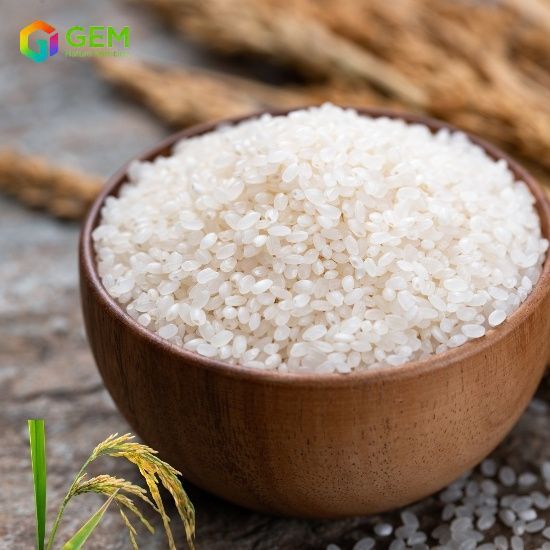
Rice protein powder
Natural plant-based protein, rich in essential amino acids, 90% digestibility. It serves as a nutritional and functional alternative to animal proteins, such as whey, and other plant proteins like soy.
| 规格名称 | 规格值 |
|---|---|
| Appearance | White grey fine powder |
| Grade | Food and feed grade are all available |
| Mesh | 300mesh; 600mesh; 1000mesh |
| Shelf Life | 24 months |
| Main function | Promote skeletal development and protein supplement |
Rice Protein
Rice Protein Powder Quick View:
Specification: 80%, 85%, 90%(food grade); 50%, 65%(feed grade).
Certificate: ISO22000; ISO14001; ISO9001; FSSC22000; BRC; Kosher; Halal.
Annual Production Capacity: More than 1000 tons.
Features: Non-GMO; Non-ETO; Fine powder; Easy digestibility; Plant-based protein; Vegan food; Green food.
Application: Sports nutrition; Dietary supplement; Nutritional ingredients; Food and beverages; Protein bar&Snack; Baking&Smoothies; Cosmetics, etc.
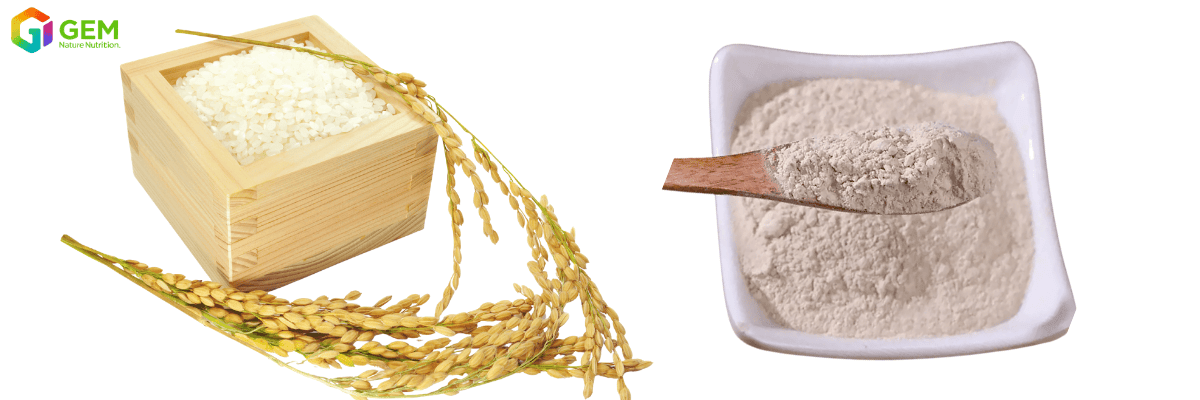
What is Rice Protein?
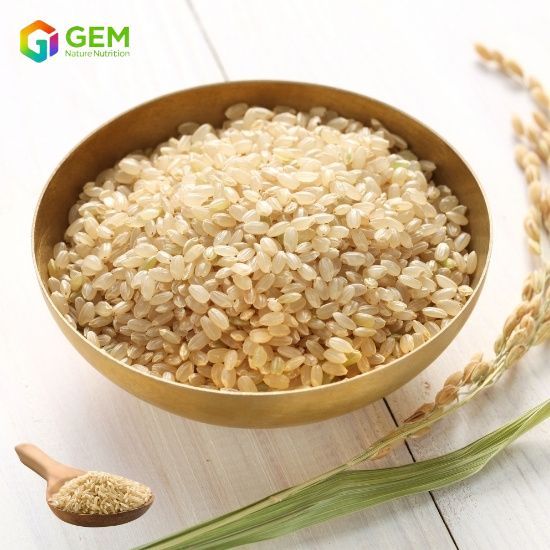
Non-GMO: Are you looking for a clean, hypoallergenic, and highly digestible plant-based protein? Rice protein is extracted from grain rice. Our premium Non-GMO rice is sourced from the fertile regions of Northeast China and Southeast Asia.
Easily Digestible: Rice protein powder is characterized by its low allergenicity, easy digestibility, and high nutritional value. It is widely used in food, health care products, and other fields. Perfect for sensitive digestive systems, from infants to the elderly.
Abundant nutrition: Rice protein is rich in amino acids, especially with a high content of lysine, it is an ideal ingredients for food manufacturing(like plant-based nutritional solution), health supplements and animal nutrition.beany" flavor, making them ideal for protein shakes, bars, and dairy alternatives.
GEM Rice Protein Product Grades: We offer scalable solutions tailored to different industry requirements:
| Product Grade | Protein Content | Primary Applications |
|---|---|---|
| Food grade | 80%, 85%, 90% | Sports nutrition, protein powders, and baked goods. |
| Feed grade | 50%, 65% | Livestock, aquaculture, and pet food. |
Rice Protein 80% Specification:
| Test Item | Specification | Test Method |
|---|---|---|
| Appearance | Off white powder | Visible |
| Taste&Odor | Characteristic | Organ |
| Particle size | 95% pass 300 mesh | Sieve Machine |
| Protein(dry basis),g/100g | ≥80% | GB 5009.5-2016 |
| Moisture, g/100g | ≤8% | GB 5009.3-2016 |
| Fat(dry basis),g/100g | ≤8% | GB 5009.6-2016 |
| Ash(dry basis),g/100g | ≤6% | GB 5009.4-2016 |
| Dietary fiber (dry basis),g/100g | ≤7% | GB 5009.88-2014 |
| Total carbohydrate,g/100g | ≤8% | GB 28050-2011 |
| PH | 5.5-7.0 | PH Meter |
| Bulk density (Non-vibration),g/cm3 | 0.30~0.40g/cm3 | GB/T 20316.2-2006 |
| Melamine,mg/kg | ≤0.1mg/kg | US FDA 4421 |
| Cyanuric acid,mg/kg | ≤0.5mg/kg | FDA LIB No.4421 modified |
| Ochratoxin A,ppb | ≤3ppb | DIN EN 14132-2009 |
| Aflatoxin B1,ppb | ≤2ppb | DIN EN 14123-2008 |
| Aflatoxin B1+B2+G1+G2,ppb | ≤4ppb | DIN EN 14123-2008 |
| Gluten | <20ppm | ESQ-TP-0207 r-BioPharm ELIS |
| Soy | <20ppm | ESQ-TP-0203 Neogen 8410 |
| GMO (Bt63), % | ≤0.01% | Real-time PCR |
| Lead,mg/kg | ≤0.5mg/kg | BS EN ISO 17294-2 2016 mod |
| Cadmium,mg/kg | ≤0.2mg/kg | BS EN ISO 17294-2 2016 mod |
| Arsenic,mg/kg | ≤0.5mg/kg | BS EN ISO 17294-2 2016 mod |
| Mercury,mg/kg | ≤0.05mg/kg | BS EN ISO 17294-2 2016 mod |
| Total Plate Count | ≤5000CFU/g | GB 4789.2-2022 |
| Yeast & Molds | ≤100CFU/g | GB 4789.15-2016 |
| Coliforms | ≤30CFU/g | GB 4789.3-2016 |
| Salmonella | Negative | GB 4789.4-2016 |
| E. Coli | Negative | GB 4789.38-2012 |
| Staphylococcus aureus | Negative | GB4789.10-2016 |
Amino Acid Testing Data in Rice Protein:
| Item | Results | Unit |
|---|---|---|
| Alanine | 4.86 | g/100g |
| Serine | 4.28 | g/100g |
| Leucine | 7.02 | g/100g |
| Cysteine+Cystine | 1.97 | g/100g |
| Aspartic acid | 7.72 | g/100g |
| Isoleucine | 3.53 | g/100g |
| Glycine | 3.76 | g/100g |
| Arginine | 7.78 | g/100g |
| Histidine | 1.99 | g/100g |
| Valine | 5.11 | g/100g |
| Oxyproline | <0.05 | g/100g |
| Proline | 3.89 | g/100g |
| Phe | 4.62 | g/100g |
| Methionine | 2.51 | g/100g |
| Glutamate | 14.2 | g/100g |
| Lysine | 3.03 | g/100g |
| Tyrosine | 5.2 | g/100g |
| Ornithine | <0.01 | g/100g |
| Hydrolyzed amino acid(18 kinds) | 83.66 | g/100g |
| Essential amino acid(9kinds) | 37.189 | g/100g |
Nutrition Testing Value for Rice Protein Powder
| Nutritional information | Results | Unit |
|---|---|---|
| Caloric content | 410 | kcal/100g |
| Total Fat | 6.93 | g/100g |
| Saturated Fat | 1.1 | g/100g |
| Trans Fat | 0.4 | g/100g |
| Dietary Fiber | 0.5 | g/100g |
| Total Carbohydrate | 2.01 | g/100g |
| Sugar | 0 | g/100g |
| Other carbohydrates | 0.3 | g/100g |
| Protein | 80 | g/100g |
| Ca(Calcium) | 1600 | mg/kg |
| P(Phosphorus) | 4710 | mg/kg |
| K(Potassium) | 128 | mg/kg |
| Na(Sodium) | 345 | mg/100g |
Remark: All values typical, not to be construed as specifications.
Test Methods: Amino Acids by AH (AOAC, Most Matrices), AOAC 982.30 mod., LC-UV/VIS Cystine & Methionine (AOAC, Most Matrices), AOAC 994.12 mod., LC-FLD.
Rice Protein Production Process:
Selected rice-Pass magnetic rod-Magnetic separator-Soaking-Pass magnetic rod-Smash fine powder-Mixedmaterials-High temperature liquefaction-First frame separation-Washing protein slag-Second centrifuge separation-Washing protein slag-Instantaneous sterilization-Adjust rice slag slurry-Pass magnetic rod-Third frame separation-Steam drying-Pass magnetic rod-Ball grinder-Pass air current sieve-Measurement packaging-Metal detection-Warehouse storage-Lable&packing.
How to Choose the Right Rice Protein Concentration (80%, 85%, or 90%)?
Selecting the correct protein concentration is essential for balancing product performance and cost-effectiveness. While the physical specifications (solubility, color, and mesh size) remain consistent across our grades, the protein content varies to meet specific formulation goals.
1. 80% Rice Protein: The Industry Standard
The 80% concentration is our most popular choice and the "go-to" for the majority of our global customers.
Best For: Standard food applications, protein bars, and general health supplements.
Why choose it? It offers the best balance between high nutritional value and cost-efficiency, making it ideal for high-volume manufacturing and competitive retail markets.
2. 85% Rice Protein: The Mid-Range Specialist
The 85% concentration serves as a bridge for brands looking to claim a slightly higher protein "punch" on their nutritional labels without the premium cost of an isolate.
Best For: Premium meal replacements and specialized "clean label" formulations.
3. 90% Rice Protein: The Pure Isolate
If your product targets professional athletes or medical-grade nutrition, the 90% concentration (Rice Protein Isolate) is the superior choice.
Best For: Professional sports nutrition, low-carb/keto formulations, and high-purity protein shakes.
Why choose it? It provides the highest protein-to-weight ratio, ensuring your customers get the most concentrated amino acid profile possible in every serving.
What's the Major Function of Rice Protein?
At GEM Nature Nutrition, we don't just supply ingredients; we provide high-performance nutritional solutions. Our rice protein is engineered to meet the rigorous demands of the global B2B market, offering five essential functions for your end-products.
1. A High-Bioavailability Alternative to Soy and Whey
Our rice protein is a complete plant-based source. With a biological utilization rate of over 90%, it serves as a premium replacement for animal proteins.
The GEM Difference: We prioritize sourcing from high-latitude regions in Northeast China, ensuring a clean, consistent amino acid profile that matches the ideal protein patterns recommended by the WHO/FAO.
2. Hypoallergenic Excellence for Sensitive Formulations
Unlike soy or wheat, our rice protein is naturally free from gluten, lactose, and major allergens. This makes it the "Gold Standard" for:
Clean-Label Infant Food: Gentle on developing digestive systems.
Free-From Product Lines: Perfect for consumers with soy or dairy intolerances.
3. Precision Muscle Synthesis & Tissue Repair
We optimize our processing to preserve the integrity of vital amino acids:
BCAA Powerhouse: High Leucine content triggers muscle repair and synthesis, making our protein a favorite for sports nutrition brands.
Mucosal Support: Our high Glutamine levels assist in intestinal repair and immune system regulation, offering a functional edge in wellness supplements.
4. Metabolic Support & Cardiovascular Wellness
GEM rice protein is a strategic tool for weight management. By increasing satiety and reducing calorie intake, it supports healthy body composition. Furthermore, our low-fat, plant-based profile supports serum cholesterol reduction, aligning your products with heart-healthy consumer trends.
5. Natural Antioxidant Protection (Ferulic Acid & Oryzanol)
Our gentle extraction process retains the rice’s natural bioactive compounds:
Ferulic Acid & Oryzanol: These natural antioxidants neutralize free radicals and reduce oxidative stress.
Anti-Fatigue Properties: Ideal for post-workout recovery drinks designed to reduce cellular aging and physical exhaustion.
FAQ
1. Is rice protein a "complete" protein?
Yes. While some plant proteins are low in certain amino acids, rice protein contains all nine essential amino acids. It is especially high in methionine and cysteine. When compared to the WHO/FAO ideal protein pattern, rice protein shows a high biological value, making it an excellent alternative to whey or soy.
2. How does rice protein compare to whey protein?
Rice protein is the plant-based answer to whey. While whey is derived from dairy, rice protein is 100% vegan, lactose-free, and hypoallergenic. Clinical studies have shown that high-quality rice protein (like our 80% or 90% grades) is just as effective as whey for muscle repair and growth due to its high BCAA (Leucine) content.
3. Is your rice protein Non-GMO?
Absolutely. At GEM Nature Nutrition, we select only high-quality Non-GMO rice sourced from Northeast China and Southeast Asia.We can provide Non-GMO testing report.
4. Why is rice protein often used in baby food and infant formula?
Rice protein is characterized by its low allergenicity and easy digestibility. Unlike soy or dairy, which are common allergens, rice protein is very gentle on an infant’s developing digestive system. This makes it the preferred protein source for "sensitive" or "hypoallergenic" infant nutrition.
5. Does rice protein have a strong taste?
Our advanced extraction and purification processes result in a rice protein with a neutral flavor profile and a fine texture. This allows it to blend easily into protein shakes, dairy alternatives, and baked goods without overpowering the other ingredients.
6. Can rice protein help with weight loss?
Yes. High-protein diets increase satiety (the feeling of fullness), which helps reduce overall calorie intake. Additionally, research suggests that rice protein may help reduce serum cholesterol, supporting overall cardiovascular health during weight management.