Spirulina
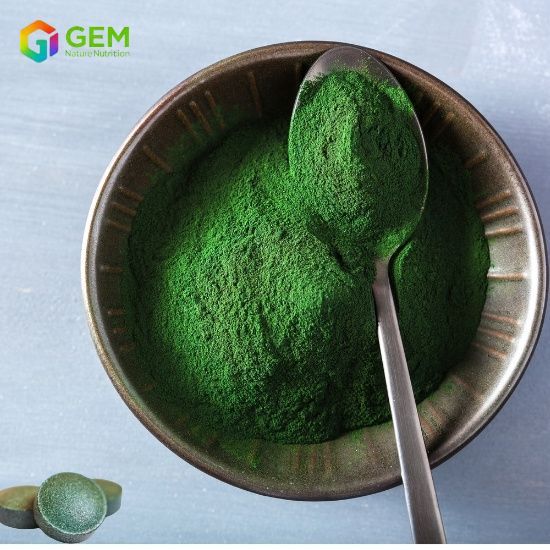
Discover why Spirulina is called "nature’s multivitamin." Packed with 70% plant protein, bioavailable iron, and antioxidants. Boost your wellness naturally today!
| 规格名称 | 规格值 |
|---|---|
| Assay | Protein60% |
| Forms | Powder; Tablets |
| Latin Name | Arthrospira Platensis |
| Shelf Life | 24 months |
| Stock | Regular storage |
Spirulina
Spirulina Quick View:
Specification: 60% protein.
Grade: Food grade; Feed grade.
Certificate: FSSC22000; ISO9001; GMP; HACCP; Kosher; Halal
Annual Production Capacity: More than 500 tons
Features: Fine powder; Non-GMO; Non-ETO; Non-Radiation; USP&EP Standard; Allergen (soy, gluten) free; Beautiful blue-green color.
Application: Pharmaceutical and medicine; Dietary supplement; Basic nutritional ingredients; Food and beverages; Food additives and Cosmetics; Nature pigment; Feed ingredients, etc.
Main Function: Antioxidant and enhances immunity.
Storage Condition: To store at 0℃—20℃ and to avoid light and heat
What is Spirulina?
Spirulina is a nutrient-dense blue-green algae (scientifically known as cyanobacteria) that thrives in both fresh and salt water. As one of the world’s oldest life forms, it has evolved from an ancient food source to a globally recognized "superfood."
Sourced from the heart of Inner Mongolia, our spirulina benefits from a famous production hub. By leveraging local technical expertise and a rich supply of raw materials, we provide high-quality spirulina from this region where this superfood is the backbone of the local economy.
We often described it as a "multivitamin from nature," spirulina packs an incredible nutritional punch into a tiny serving. Here is why health enthusiasts and space agencies alike are calling it a dietary essential.
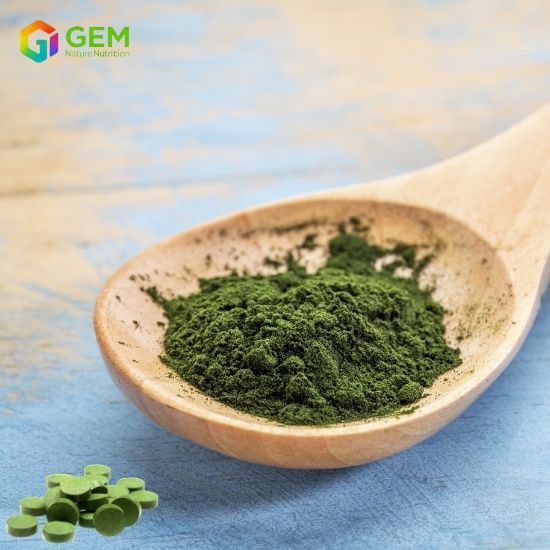
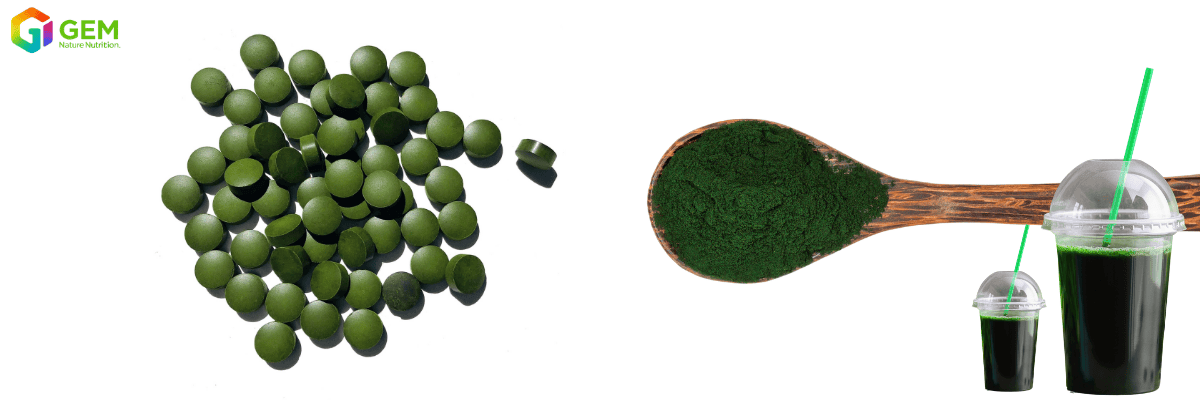
Forms: We have spirulina powder for powder products or capsules and spirulina tablets(250mg/tablet; 500mg/tablet).
Spirulina Powder 60% Protein Specification:
| Testing Item | Specification | Test Method |
|---|---|---|
| Appearance | Dark Green Powder | Visual |
| Protein | 60% | GB5009.5-2010 |
| Mesh | 95% pass 80mesh | Seive Machine |
| Phycocyanin | ≥ 8% | SNT 1113-2002 |
| Benzo(a)pyrene | ≤10µg/kg | Internal Method,GC-MS |
| PAHs | ≤ 50µg/kg | Internal Method,GC-MS |
| Moisture | ≤ 7.0% | GB5009.3-2016 |
| Ash | ≤ 7.0% | GB5009.4-2016 |
| Lead (Pb) | ≤ 1.0 mg/kg | GB 5009.12-2017 |
| Arsenic (As) | ≤ 1.0 mg/kg | GB 5009.11-2003 |
| Cadmium (Cd) | ≤ 0.5 mg/kg | GB 5009.15-2014 |
| Mercury (Hg) | ≤ 0.1 mg/kg | GB 5009.17-2003 |
| Total Plate Count | ≤ 50,000 cfu/g | GB 4789.2-2010 |
| Molds and Yeasts | ≤ 100 cfu/g | GB 4789.15-2010 |
| Salmonella | Absence/25g | GB 4789.4-2010 |
| Coliforms | Absence/25g | GB 47891.3-2010 |
| Staphylococcus aureus | Absence/25g | GB 4789.10-2010 |
Factory Production Flow Process:
Harvesting: Spirulina collection by centrifugation or filtration method;
Filtration & Rinsing: Separating biomass from water and washing with fresh water;
Dewatering/Pressing: Vacuum suction or mechanical pressing into a "green cake";
Drying: Spray Drying;
Milling/Grinding: Breaking dried flakes into a fine, uniform powder;
Packaging: Packed according to customer’s request;
What’s the Core Functions of Spirulina?
Why we call spirulina as “super food”? Please see below reasons for it.
1. **Nutritional "Fuel"****.
Spirulina is most famous for its extraordinary nutrient density. Just a single tablespoon provides 60–70% high-quality protein. It is also rich in B vitamins (B1, B2, B3), iron, and copper. What’s more, it contains gamma-linolenic acid (GLA) which is an essential fatty acid with anti-inflammatory properties.
2. Packed with Phycocyanin (The Master Antioxidant)
Spirulina’s deep blue-green hue comes from phycocyanin, a unique pigment not found in most other plants. Beyond its color, phycocyanin acts as a powerful antioxidant with strong anti-inflammatory properties, helping your body fight oxidative stress and support cellular health.
3. Immune System Support
Spirulina can help balance the immune system.
4. Cardiovascular & Metabolic Health
It can lower "bad" LDL cholesterol and triglycerides while raising "good" HDL cholesterol. Also spirulina can lower blood pressure and blood sugar, making it helpful for those who are with Type 2 diabetes.
5. Energy & Athletic Recovery
Due to its high bioavailable iron content, it is often used to improve hemoglobin levels and reduce fatigue. Athletes can use it to reduce exercise-induced oxidative damage which helps muscle recovery and improve endurance.
6. The "Food of the Future": NASA-Approved Nutrition
The nutritional density of spirulina is so high that both NASA and the European Space Agency have researched it as a primary food source for long-term space missions. Because it provides maximum nutrition with minimal weight, it is the perfect "astronaut food" for the most demanding environments.
What’s the Major Application of Spirulina?
Spirulina is one of the most widely used biological resources on Earth. It is very easy to grow. It has specialized proteins and pigments.
1. Food and Nutrition (The Most Common Use)
Spirulina is primarily known as a "superfood" for humans:
Dietary Supplements: Forms can be powder, tablets or capsules to boost protein, iron and B-vitamins.
Natural Food Coloring: The blue pigment phycocyanin coming from spirulina is one of the few natural blue dyes used in ice cream, candies, snacks or cakes.
Functional Foods: It can be added to protein bars, juices and snacks to improve products’ nutritional profile.
2. Cosmetics and Personal Care
Spirulina is a popular ingredient in beauty products due to its excellent antioxidant properties:
Anti-Aging: It can be used in face masks and creams to protect skin.
Natural Pigment: Used in makeup (such as eyeshadows) as a safe, plant-based colorant.
Skin moisturizing: The proteins and polysaccharides in spirulina help our skin retain moisture.
3. Animal Feed
Spirulina is not only used in food industry but also welcome in feed ingredients which plays an important role in animal nutrition. Both food grade and feed grade spirulina are available.
Poultry: Giving some spirulina to chicken will help eggs more nutritional and deeper yellow/orange yolks due to its high carotenoid content.
Aquaculture: Spirulina is a premium feed ingredients for fish like salmon and shrimp to improve their growth and enhance the natural color of their flesh.
4. Environmental Applications
Spirulina is a potent tool for sustainability and "green" technology:
Wastewater Treatment: The plant algae can "clean" water by absorbing heavy metals (like lead and mercury) which can reduce heavy metal in water, our plant base is in the north of China which has a fresh environment to make sure our spirulina meets the EU/USP standard.
Reducing Carbon Emissions: Like all algae, it consumes CO₂ to grow up. Large-scale spirulina farms can reduce greenhouse gases in the atmosphere.